I'm trying to land interviews with a sell side IB's S&T desk. Its an offshore quant role, in interest rates modeling.According to the JD, the core responsibilities in this role are:. Enhance pricing and risk models for fixed income derivatives and implement them in python and C. Identify major sources of risk in portfolios, carry out scenario analysis, provide guidance / debug analytics. Rapid prototyping of models and products; benchmark and compare results of various techniquesI don't have any understanding of what a quant does in a rates modeling role, or a modeling role in general.
Apr 26, 2012 Download manual guide of Download Interest Rate Modeling By L Anderson in pdf that we listed in Manual Guide. This manual books file was hosted in lesniewski.us that avaialble for FREE DOWNLOAD as owners manual, user guide / buyer guide or mechanic reference guide. Content: Feb 10, 2011 Interest Rates And Fx Models.2. Interest Rates & Fx Models. 1 Andersen, L., And Piterbarg, V. The three volumes of Interest Rate Modeling present a comprehensive and up-to-date treatment of techniques and models used in the pricing and risk management of fixed income securities. Piterbarg Cooking With Collateral Pdf Download - DOWNLOAD (Mirror #1).

Is there some basic introductory guide that will help me get a basic understanding of modeling in quantitative finance, and subsequently give me an idea of what I need to prepare for the technical side of the interviews?. +1 for the heard on the st. Just finished interviewing for a similar role. Most of the questions will be similar to the exercises presented there. Pm of you want specific advice as I worked as an IR derivative quant for a few years.EDIT: Added more specific advice for the benefit of anyone reading laterFor an entry level role know probability(pigeon hole, bayes rule, combinatorics) statistics (distributions and moments), basic math (price yield relationship, duration,convexity), basic options (what is an option, black scholes assumptions,how greeks work is a high level overview). Your role will be to understand the models and systems already built, maintain and improve them, so know OOP concepts at the very least. The fact that you say you dont 'need to know finance' tells me that the interview will be focused on your CS, probability and statistics skills.
So if you have that section of heard on the st figured out, you should be good. Let me know if you need more help. Because it is an offshore role and because you mentioned in another post that 'a few folks from inside the firm suggested that its okay if i dont know finance', I am guessing that knowledge in interest rates is definitely not needed or even tested, and financial mathematics and stochastic calculus is not going to be playing any important role. I think everything said is valid and I expect the interview to be much like that of a standard software engineer (maybe with less big O, and more probability), and so you could also look at resources meant for people applying to the Big Four.For books introducing the subject of interest rate modeling, look to Andersen & Piterbarg or the already mentioned Brigo & Mercurio. These do, however, largely assume that you're already familiar with financial mathematics at the level of e.g. Baxter & Rennie or Shreve. There's too many Big X's indeed, but I meant the Big Four/Big N of tech, prevalent at e.g.
(buy side quant firms also often feature in the discussions over at that subreddit, which may be of interest to the OP).As for Andersen & Piterbarg, it is my favorite book on interest rates modeling. That said, its structure can make it rather difficult to approach; I can tell that the authors tried hard not to expand too much on many of the subjects, but still, it's already 700 pages in when we get to where they actually start really pricing products and so for someone new to the subject, it's tough to motivate oneself to go through two volumes of books of background maths before actually understanding why its really relevant. In some sense it actually makes more sense to start reading from the last volume and then jump back to the earlier ones when their results are referenced.That may make it a bit more of a reference book, but I think there is nothing better out there (I do also have Brigo & Mercurio, but did not like it as much as Andersen & Piterbarg, though I can see why someone else might prefer it).
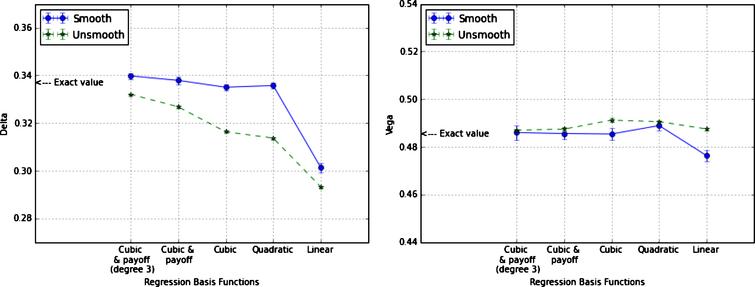
Also, A&P is self-contained and not too mathematical in nature, which I like. If I were doing a course on intro to rates modeling, I would probably pick and choose a few subjects from the series with some clear objectives; for example, one such objective might be to be able to price a CMS cap, which requires a nice and useful intersection of many subjects from each of the volumes (which I guess why it's such a common interview question).
Tryout cat cpns dilakukan secara online. BENTUK PELAKSANAAN. Materi soal CAT SKD (Seleksi Kompetensi Dasar) terdiri:- Tes Wawasan Kebangsaan (TWK)- Tes Intelegensi Umum (TIU)- Tes Karakteristik Pribadi (TKP)C.
'The three volumes of Interest rate modeling are aimed primarily at practitioners working in the area of interest rate derivatives, but much of the material is quite general and, we believe, will also hold significant appeal to researchers working in other asset classes. Students and academics interested in financial engineering and applied work will find the material particularly useful for its description of real-life model usage and for its expansive discussion of model calibration, approximation theory, and numerical methods.'
Short Rate Models
-Prefacio.Physical Description. Foundations and vanilla models: Introduction to arbitrage pricing theory; Finite difference methods; Monte Carlo methods; Fundamentals of interest rate modeling; Fixed income instruments; Yield curve construction and risk management; Vanilla models with local volatility; Vanilla Models with stochastic volatility I; Vanilla models with stochastic volatility II. v. Term structure models: One-factor short rate models I; One-factor short rate models II; Multi-factor short rate models; The quasi-Gaussian model; The Libor market model I; The Libor market model II.
v. Products and risk management: Single-rate vanilla derivatives; Multi-rate vanilla derivatives; Callable Libor exotics; Bermudan swaptions; TARNs, volatility swaps, and other derivatives; Out-of-model adjustments; Introduction to risk management; Payoff smoothing and related methods; Pathwise differentiation; Importance sampling and control variates; Vegas in Libor market models. Appendix: Markovian projection.